What Is the Best Way to Start Day Trading From Scratch
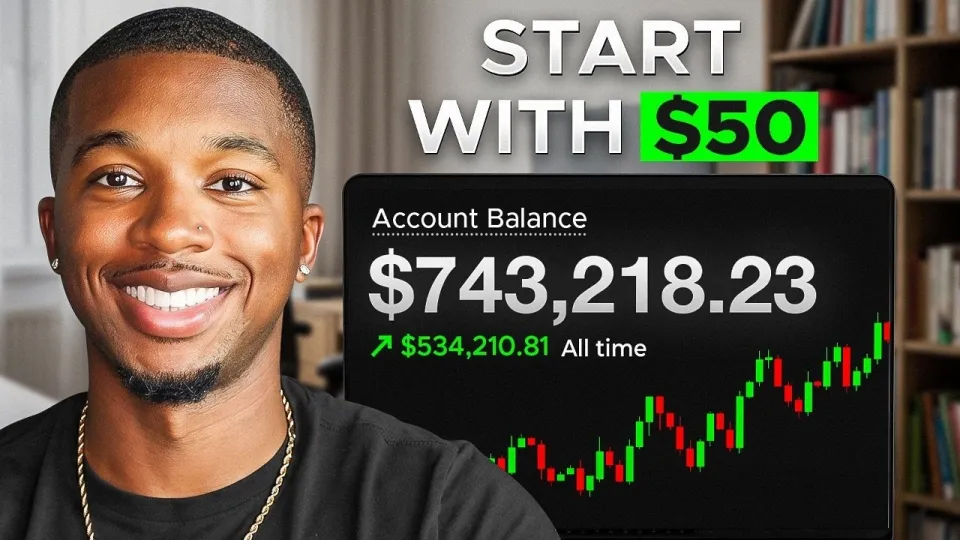
Video: Easiest Way To Start Day Trading From Scratch (Exactly What I Did)
Want articles like this for your own video to promote it on YouTube and Google? Order them through the Telegram bot @sat_sit_bot. It writes articles around your video, embeds the video and publishes them on popular niche websites (no ads). Try it free: 50 articles on us.
· based on the channel Jooviers Gems
The best way to start day trading from scratch is to pick one market, learn one repeatable setup, and prove it on a demo account before paying for a prop firm evaluation or funding a personal account. That order matters more than the strategy itself, because execution habits — not indicators — decide whether a beginner survives the first six months. If you want to follow the exact beginner path shown on the Jooviers Gems channel, the creator keeps his trade breakdowns and beginner material inside his Inner Circle, which is the fastest way to see how a setup is actually traded in real time.
Why starting from scratch is mostly a sequence problem
Starting from scratch fails for beginners not because the market is impossible, but because they do the steps in the wrong order: they fund an account first, learn a strategy second, and manage risk last. The sequence that actually works is reversed.
- Choose one instrument. Futures like the Micro E-mini S&P (MES) or Micro Nasdaq (MNQ) are common beginner choices because they trade nearly 24 hours, have tight spreads, and let you control risk with a small number of contracts. Forex majors such as EUR/USD and GBP/USD are the other standard entry point.
- Choose one setup. A single pattern — a failed breakout, a trend pullback, or a range rejection — traded 100 times teaches more than ten patterns traded ten times each.
- Trade it on a demo account for at least 30 sessions. The goal is not profit; it is proving you can follow your own rules when nothing is at stake.
- Define risk before size. Most beginner blowups come from sizing up after a loss, not from a bad strategy.
- Only then decide how to fund: a prop firm evaluation or your own small account.
The reason this order works is that a beginner with a $500 account and clear rules will outperform a beginner with a $50,000 funded account and no rules almost every time.
The two realistic funding routes for a new trader
A new trader has exactly two practical ways to get capital behind their decisions, and they behave very differently. A prop firm evaluation is a paid test: you pay a fee, usually between $50 and $500 depending on account size, and you trade the firm's capital under a rule set. Typical evaluation rules include a profit target of 6–10%, a daily loss limit of 4–5%, and a maximum trailing drawdown of 6–10%. Pass the evaluation and you trade a funded account and split profits, often 80/20 or 90/10 in the trader's favor. The upside is obvious: access to $25,000–$200,000 in buying power for a small upfront cost. The downside is that the rules create pressure, and pressure is exactly what a beginner handles worst.
A small personal account works the opposite way. With $500–$2,000 of your own money there is no profit target, no daily loss limit imposed by someone else, and no time limit. You can hold a losing trade overnight if your plan allows it, and you can take a month off without losing your account. The trade-off is speed: at 1% risk per trade, a $1,000 account makes $10 per winning trade at a 1:1 reward-to-risk ratio, so meaningful income takes a long time. That slowness is a feature, not a bug — it forces you to build the habits that funded traders are expected to already have.
How much capital you actually need to begin
You do not need a large account to start day trading; you need an account large enough that a normal losing streak does not end your participation. The math is simple. If you risk 1% per trade and lose ten trades in a row — which happens to almost every trader at some point — you are down roughly 10% of the account. On a $1,000 account that is $100, which is painful but survivable. On a $10,000 account it is $1,000, which is the same percentage but a much larger emotional hit for most beginners.
A practical starting range is $500 to $2,000 for a personal account, or a single evaluation fee with a firm if you already have a written plan and 30+ demo sessions behind you. What you should not do is start with money you need for rent, or with a size that makes you check the chart every five minutes. Position size, not account size, is the real variable: a $500 futures account trading one Micro contract has a different risk profile than a $500 forex account trading 0.01 lots, and both are workable if the stop is placed by the plan rather than by emotion.
A simple beginner routine that holds up over time
A repeatable daily routine is what separates traders who last from traders who quit after three months. Yours does not need to be complex.
- Pre-market: mark the previous day's high, low, and close, plus any obvious support and resistance levels on your one instrument.
- Write the plan: one setup, one entry trigger, one stop, one target. If the setup does not appear, you do not trade.
- Trade one session only. Pick either the first two hours after the open or a specific window that fits your schedule, and stay out of the rest of the day.
- Journal every trade: screenshot before and after, the reason for entry, the result in R (risk multiples), and one sentence on what you would repeat.
- Review weekly, not daily. Look for patterns across 20+ trades, because single trades are noise.
A trading journal is the cheapest performance tool available, and it is the one beginners skip most often. Without it you cannot tell whether a losing week was bad execution or a normal losing streak inside a working strategy.
Common beginner doubts, answered honestly
Beginners tend to hit the same wall at the same point, and it is usually psychological rather than technical. The first doubt is whether a small account is even worth trading. It is, because the skills transfer directly: a trader who can follow rules on $1,000 can follow them on $100,000, but a trader who cannot follow rules on $1,000 will lose a funded account just as fast. The second doubt is whether a paid course or community is necessary. It is not strictly necessary, but structured feedback shortens the learning curve significantly, especially in the first three months when you cannot yet tell a good trade from a lucky one. The third doubt is the comparison trap: social media shows winning trades and hides the losing streaks, so measuring yourself against strangers online is a fast route to oversizing and revenge trading. The fourth doubt is patience. Most beginners who stick with a single setup for six months report that the first two months were mostly about unlearning bad habits, not about finding a secret indicator.
Useful links
- Inner Circle — all trades and beginner material
- The Edge Funder — instant funding evaluations
- The Edge Funder Discord community
- Joovier on Instagram
- Recommended forex broker
The takeaway for a first-year trader
Starting day trading from scratch is less about finding the perfect strategy and more about choosing a funding route that matches your current skill level. A prop firm evaluation rewards traders who already have discipline and punishes those who do not, while a small personal account builds that discipline slowly and safely. Either way, the non-negotiables are the same: one instrument, one setup, 0.5–1% risk per trade, a written plan, and a journal you actually review. The Jooviers Gems video "Easiest Way To Start Day Trading From Scratch (Exactly What I Did)" walks through this beginner path step by step, and the channel's Inner Circle is where the trade-by-trade detail lives if you want to see the process applied in real time.
Key takeaways
- The most repeatable path for a beginner is to learn one instrument and one setup, then trade it on a demo account for at least 30 sessions before risking real money.
- Prop firm evaluations give access to $25,000–$200,000 in buying power for a $50–$500 fee, but they add rules: daily loss limits, a profit target, and a maximum drawdown.
- A small personal account of $500–$2,000 is slower to scale but has no profit target and no time limit, so it builds patience and real execution habits.
- Risk per trade should stay at 0.5–1% of the account; a $1,000 account risking 1% loses $10 per trade, which keeps a 10-loss streak survivable.
- Jooviers Gems covers this exact beginner path in the video "Easiest Way To Start Day Trading From Scratch (Exactly What I Did)".
Source: Easiest Way To Start Day Trading From Scratch (Exactly What I Did) · Markdown version
Questions & answers
How much money do I need to start day trading from scratch?
A practical starting range is $500 to $2,000 for a personal account, or a single prop firm evaluation fee if you already have a written plan and at least 30 demo sessions behind you. The key number is not the account size but the risk per trade: staying at 0.5–1% means ten consecutive losses cost roughly 5–10% of the account, which is survivable. Starting with money you need for bills is the fastest way to make emotional decisions.
Is a prop firm evaluation better than trading my own small account?
It depends on whether you already have discipline. A prop firm gives you access to $25,000–$200,000 in buying power for a $50–$500 fee, but it adds a profit target, a daily loss limit, and a maximum drawdown. A small personal account has no targets or time limits but scales slowly. Most beginners are better off proving their rules on a small account first, then paying for an evaluation once the rules are automatic.
How long should I practice on a demo account before going live?
A reasonable benchmark is 30 sessions with the same setup, tracked in a journal, before risking real money. The goal is not to make demo profit but to prove you can follow your own entry, stop, and target rules when there is no financial consequence. If you cannot follow the plan on demo, a live account will not fix that — it will only make the mistakes more expensive.
What is the biggest mistake beginners make when starting out?
Sizing up after a loss and chasing the market to recover, usually combined with switching strategies every week. Both come from comparing your results to the winning trades people post online, which hides the losing streaks. A single setup traded 100 times with fixed risk teaches far more than ten setups traded ten times each, and a journal is what makes that difference visible.